Experience Economy
Research Program
At Tampere University, we are proud to launch a new program dedicated to understanding and advancing the Experience Economy
TAVARA-ASEMA, TAMPERE
TIISTAI 21.4. KLO 12.30–17 +
KAUPUNGIN ILTAVASTAANOTTO
KLO 17–19
Experiences shape who we are, bringing people together, creating lasting memories, and building communities. They are also a driving commercial force in the world as people, especially the youth, are more eager to pay for experiences over goods than at any point in time. Experiences and experientiality are also much broader than staged events. This phenomenon cuts through all aspects of our lives, where we can use experiences to enhance our interactions in business, recreation, work, and education.
At Tampere University, we are proud to launch a new program dedicated to understanding and advancing the Experience Economy — a field originally popularized by B. Joseph Pine II and James H. Gilmore, and now more relevant than ever. We are nested within the Faculty of Management and Business at Tampere University. Still, we work closely with Tampere University of Applied Sciences (TAMK), other faculties at the university and a wide number of international partners on a research initiative basis.
In this program, we take their foundational work as a starting point but also go further: we dive deep into how experiences are lived, shared, and commercialized in today’s world. We focus on staged experiences — from cultural events and tourism to games, immersive environments, and community-building encounters, and the multitude of ways in which experiences are used to enhance our business and community. Our lens includes both individual experience and shared, collective meaning-making, paying close attention to how experiences shape identity, belonging, and value in different contexts and how commercial organizations operate in these contexts. connect. The experience economy is not just about entertainment. It is about enabling meaningful lives for individuals, providing building blocks for communities, and sustainable fuel for the economy.
Experiences shape who we are, bringing people together, creating lasting memories, and building communities. They are also a driving commercial force in the world as people, especially the youth, are more eager to pay for experiences over goods than at any point in time. Experiences and experientiality are also much broader than staged events. This phenomenon cuts through all aspects of our lives, where we can use experiences to enhance our interactions in business, recreation, work, and education.
At Tampere University, we are proud to launch a new program dedicated to understanding and advancing the Experience Economy — a field originally popularized by B. Joseph Pine II and James H. Gilmore, and now more relevant than ever. We are nested within the Faculty of Management and Business at Tampere University. Still, we work closely with Tampere University of Applied Sciences (TAMK), other faculties at the university and a wide number of international partners on a research initiative basis.
In this program, we take their foundational work as a starting point but also go further: we dive deep into how experiences are lived, shared, and commercialized in today’s world. We focus on staged experiences — from cultural events and tourism to games, immersive environments, and community-building encounters, and the multitude of ways in which experiences are used to enhance our business and community. Our lens includes both individual experience and shared, collective meaning-making, paying close attention to how experiences shape identity, belonging, and value in different contexts and how commercial organizations operate in these contexts. connect. The experience economy is not just about entertainment. It is about enabling meaningful lives for individuals, providing building blocks for communities, and sustainable fuel for the economy.
Experiences shape who we are, bringing people together, creating lasting memories, and building communities. They are also a driving commercial force in the world as people, especially the youth, are more eager to pay for experiences over goods than at any point in time. Experiences and experientiality are also much broader than staged events. This phenomenon cuts through all aspects of our lives, where we can use experiences to enhance our interactions in business, recreation, work, and education.
At Tampere University, we are proud to launch a new program dedicated to understanding and advancing the Experience Economy — a field originally popularized by B. Joseph Pine II and James H. Gilmore, and now more relevant than ever. We are nested within the Faculty of Management and Business at Tampere University. Still, we work closely with Tampere University of Applied Sciences (TAMK), other faculties at the university and a wide number of international partners on a research initiative basis.
In this program, we take their foundational work as a starting point but also go further: we dive deep into how experiences are lived, shared, and commercialized in today’s world. We focus on staged experiences — from cultural events and tourism to games, immersive environments, and community-building encounters, and the multitude of ways in which experiences are used to enhance our business and community. Our lens includes both individual experience and shared, collective meaning-making, paying close attention to how experiences shape identity, belonging, and value in different contexts and how commercial organizations operate in these contexts. connect. The experience economy is not just about entertainment. It is about enabling meaningful lives for individuals, providing building blocks for communities, and sustainable fuel for the economy.
Elämystalousfoorumi II -seminaarin ohjelma
Klo 12.30-12.45 Tapahtuman avaus ja tervetulosanat, Maiju T. Viiki, Tampereen kaupunki & Mika Kylänen, TAMK
12.45-13.15 Olipa hienoa! Vai oliko? — Kuka päättää elämyksistäsi AI-aikakaudella? Miika Salmi Lipiäinen, Elämystalouden työelämäprofessori, Tampereen yliopisto
13.15-13.45 Kun kokemus muuttuu ilmiöksi — Mitä jalkapallo opettaa ihmisten ajasta, huomiosta ja yhteisöistä?, Katri Mattsson, Varapuheenjohtaja, Suomen Palloliitto
13.45-14.15 Tauko
14.15-14.45 Suurtapahtuman ilmiöittäminen — Case-esimerkkejä Tampereelta, Saara Saarteinen, Tapahtumapäällikkö, Tampereen kaupunki
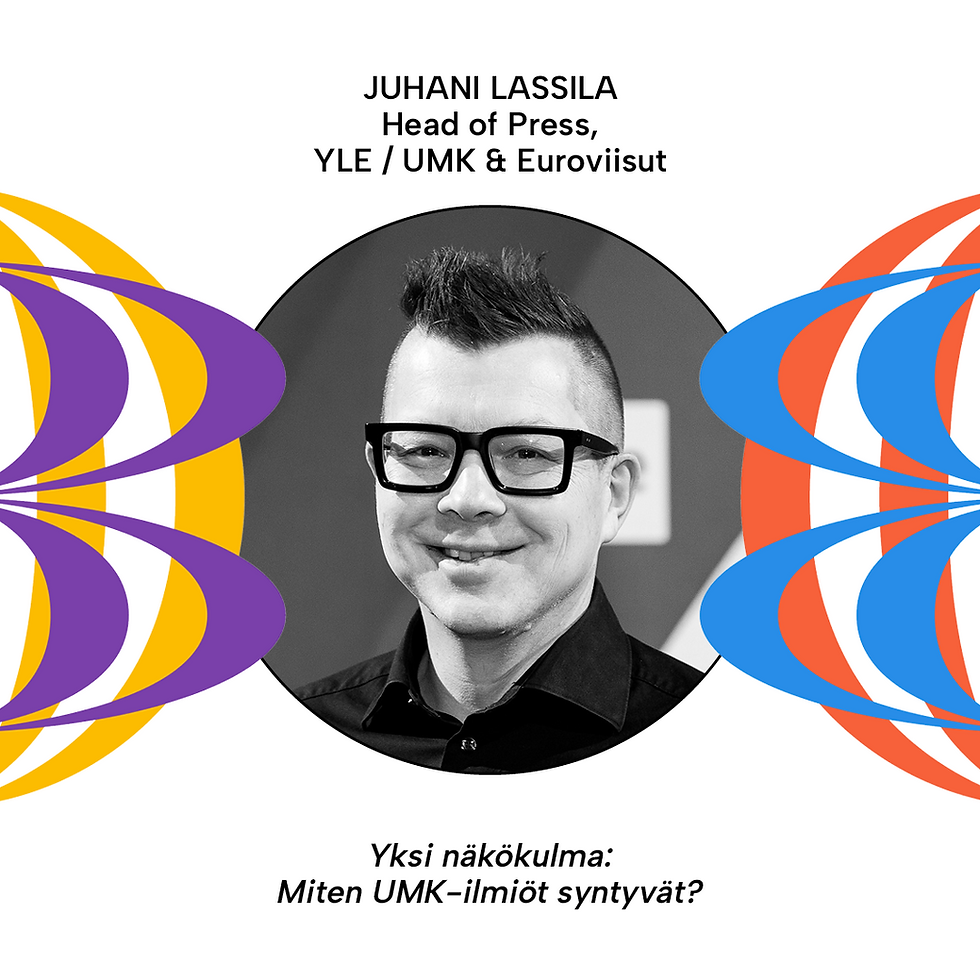
14.45-15.15 Yksi näkökulma: miten UMK-ilmiöt syntyvät, Juhani Lassila, Head of Press, YLE / UMK & Euroviisut
15.15-16.00 Creative leadership in the world of meaning making and stories, Martin Österdahl, Former Executive Supervisor of the European Song Contest, Speaker & Author
16.00-16.15 Tauko
16.15-17.00 Panel discussion: City as a platform for phenomena and meaning making, hosted by Viiki
Mukana tapahtumassa